
Okavango River
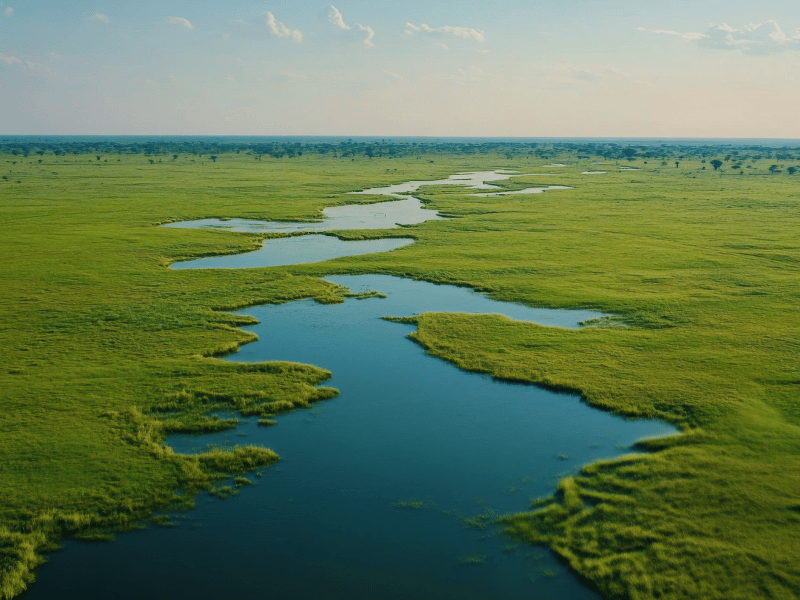
The Okavango River, also known as the Cubango in Angola and the Kavango in Namibia, stretches approximately 1,600 kilometers, making it the fourth-longest river system in southern Africa. It originates in the sandy highlands of central Angola at an elevation of about 1,300 meters and flows southeastward, forming part of the border between Angola and Namibia before entering Botswana. Unlike most rivers, the Okavango does not empty into the sea; instead, it disperses into the Kalahari Desert, forming the vast Okavango Delta—an inland, endorheic basin.
This delta, which varies in size from 6,000 to 15,000 square kilometers depending on the season, receives an average annual inflow of around 11 cubic kilometers of water. It sustains a rich diversity of wildlife, particularly during the dry season, and represents a remarkable interplay of climate, geology, hydrology, and biology. In recognition of its ecological significance, the Okavango Delta was designated a UNESCO World Heritage Site in 2014. The river is named after the Okavango (or Kavango) people of northern Namibia, and the first known European to witness its swampy delta was Scottish missionary and explorer David Livingstone, who arrived there in 1849.
Physical Address:
Okavango Delta, an inland delta
Northern Botswana